Incense guide · 2026-07-08
Incense for guests, morning rooms, and clean atmospheres
Not every incense is for night. Some scents work better in the morning or before guests arrive.
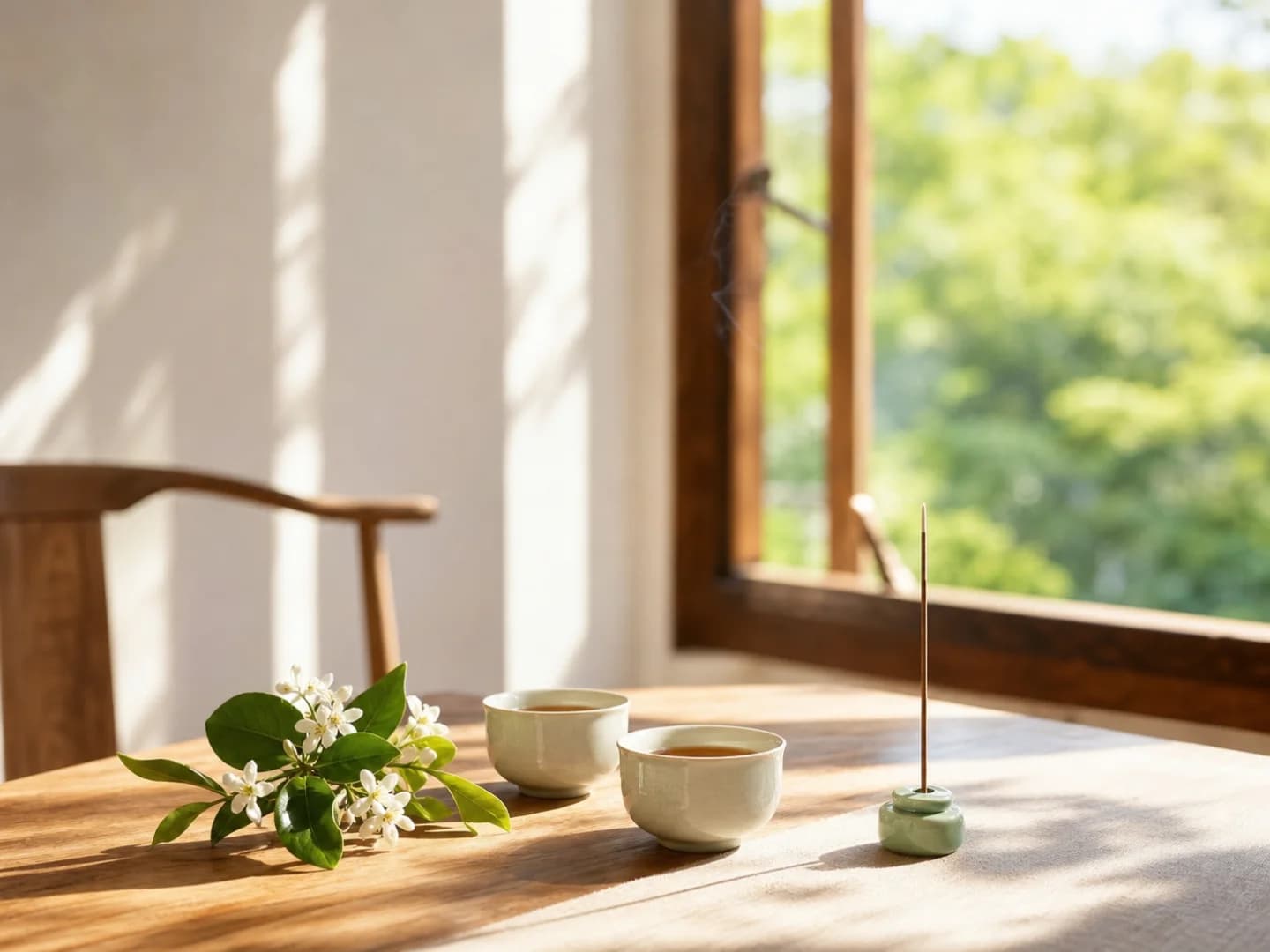
Frankincense is useful here. It has a resin note that can feel clear without becoming minty or sharp. When paired with sandalwood, it becomes warmer and easier to place in a living room.
This kind of scent works when you want the room to feel ready, not perfumed. Light it before guests arrive, not after the room is already full. Give the incense time to burn and the air time to move.
Good uses:
| Moment | Why frankincense works |
|---|---|
| Morning reset | Bright resin cuts through stale air |
| Before guests | Feels clean without smelling like cleaner |
| Entryway nearby | Gives the home a first scent impression |
| After cooking, with ventilation | Helps shift the room without masking everything |
| Quiet work in daylight | Lighter than heavy woods |
Avoid using incense to cover bad odors. Fix the source first. Open a window, clean the surface, take out the trash, or air out the room. Incense works better as a finishing layer than a cover-up.
Oman Frankincense fits this lane. It combines sandalwood, Oman frankincense, and makko. The scent direction is bright resin with a soft creamy edge. It is a good alternative when sandalwood feels too quiet and floral incense feels too personal.
What incense works for guests, morning rooms, and clean atmospheres?
Not every incense is for night. Some scents work better in the morning or before guests arrive. Frankincense is useful here. It has a resin note that can feel clear without becoming minty or sharp. When paired with sandalwood, it becomes warmer and easier to place in a living room.
Related reading
What Incense Sticks Are Suitable for a Yoga Space?
Yoga spaces are better suited to soft, low-smoke, stable-burning incense sticks with gentle woody, herbal, or light floral scent directions.
Read article →What Are the Main Ingredients of Incense Sticks?
Incense sticks are typically made from fragrance powders, base powders, and binders. Some recipes also include resins, herbs, flowers, or spices.
Read article →What Are the Common Forms of Incense?
Common incense forms include incense sticks, coils, cones, incense powder, incense seal, incense pellets, incense cakes, and sachets. Each form is suited to different spaces, burn times, smoke levels, and usage methods.
Read article →