Incense guide · 2026-07-06
How to choose incense by room
Buying incense by scent name alone is risky. A scent that sounds beautiful may not fit the room where you plan to use it.
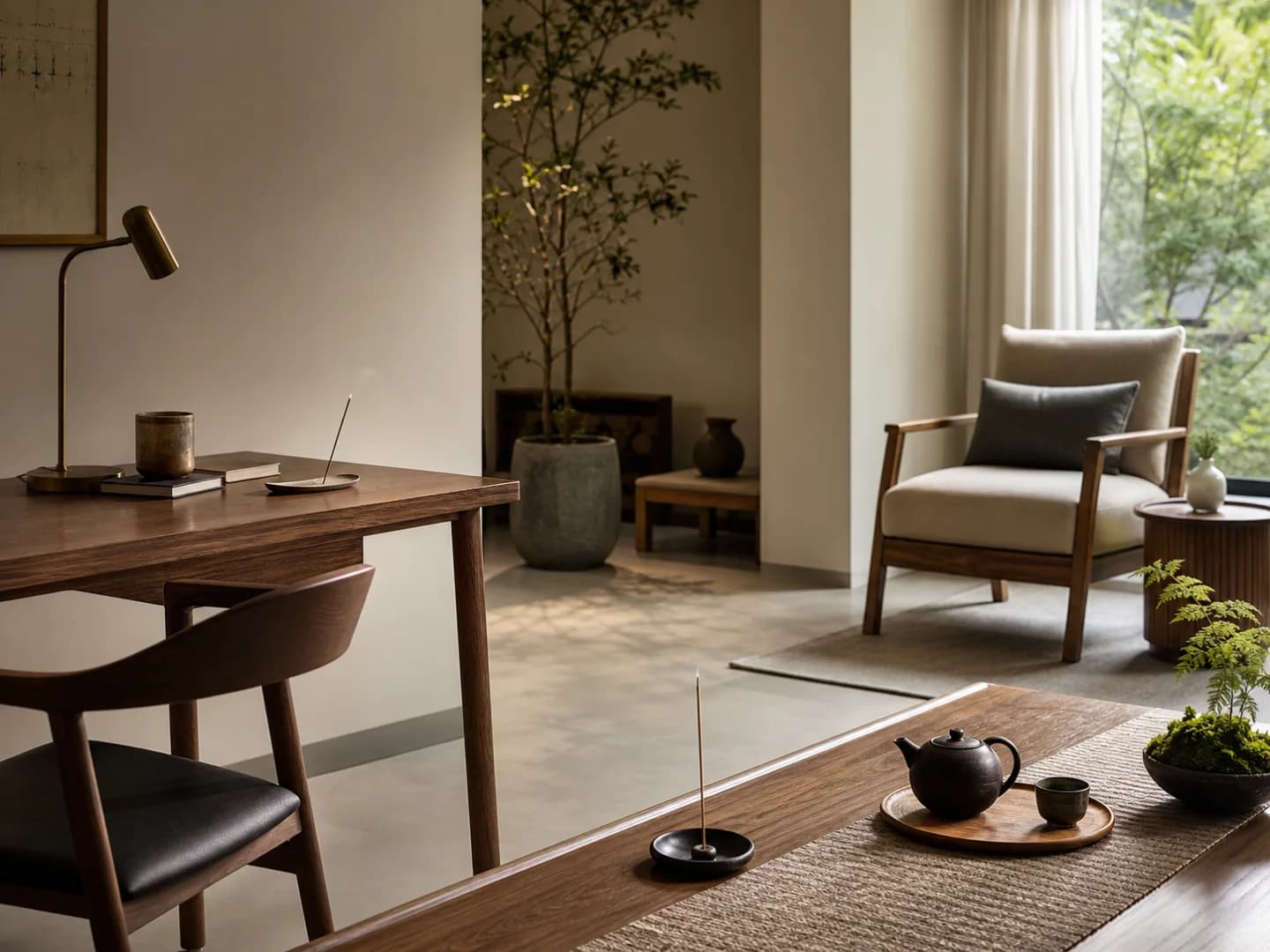
A better way is to start with the room.
| Room or moment | What usually works | Example scent direction |
|---|---|---|
| Bedroom evening | Soft, warm, not too sweet | Lavender sandalwood |
| Study or desk | Dry wood, quiet resin | Mysore sandalwood |
| Living room before guests | Clean resin, gentle wood | Oman frankincense |
| Tea table | Subtle wood or soft floral wood | Rose tea, quiet qinan |
| Meditation corner | Cedar, sage, sandalwood | Cedar sage ritual |
| After cleaning | Dry wood, light resin | Frankincense or cedar |
| Large open room | Stronger wood or palo santo | Palo santo wood |
Two things matter more than people expect: room size and fabric. Small rooms hold scent longer. Rooms with curtains, bedding, rugs, and soft furniture can hold scent even longer. If the room has a lot of fabric, choose a quieter incense.
For bedrooms, do not chase intensity. Pick something that feels soft and warm. For studies, avoid sticky sweet scents. For living rooms, frankincense can work well because it gives a clean resin note without smelling like dessert.
If you want one beginner path, start with Lavender Sandalwood for evening, Mysore Root Sandalwood for desk or tea, and Oman Frankincense for morning or guests. That covers most home use without forcing one scent to do everything.
How to choose incense by room?
Buying incense by scent name alone is risky. A scent that sounds beautiful may not fit the room where you plan to use it. A better way is to start with the room.
Related reading
What Incense Sticks Are Suitable for a Yoga Space?
Yoga spaces are better suited to soft, low-smoke, stable-burning incense sticks with gentle woody, herbal, or light floral scent directions.
Read article →What Are the Main Ingredients of Incense Sticks?
Incense sticks are typically made from fragrance powders, base powders, and binders. Some recipes also include resins, herbs, flowers, or spices.
Read article →What Are the Common Forms of Incense?
Common incense forms include incense sticks, coils, cones, incense powder, incense seal, incense pellets, incense cakes, and sachets. Each form is suited to different spaces, burn times, smoke levels, and usage methods.
Read article →