Incense guide · 2026-07-11
Can incense ash tell you if incense is natural?
Incense ash alone cannot reliably tell you whether incense is natural or made with artificial fragrance oils. Online advice often says that curled, unbroken ash…
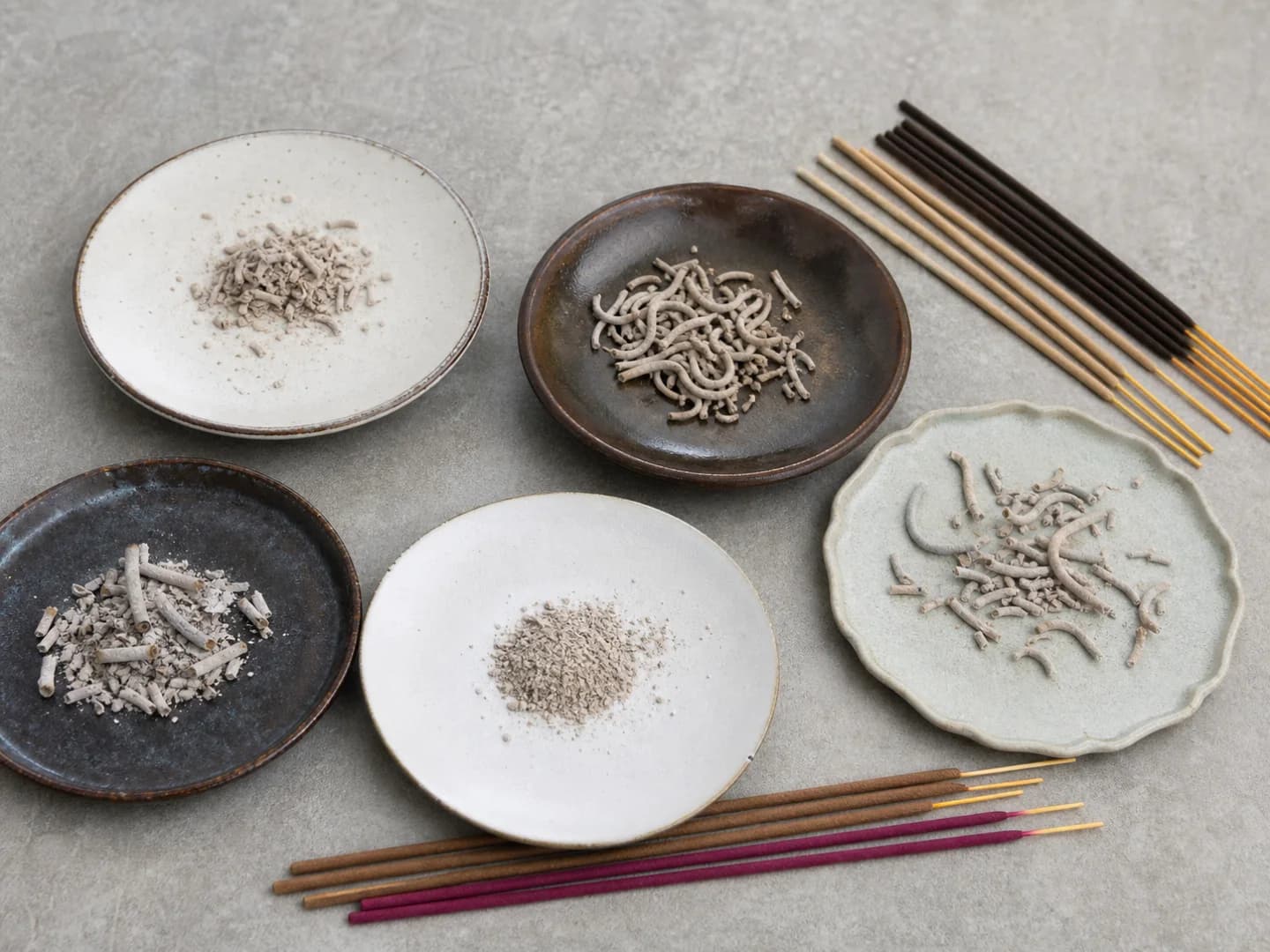
Incense ash alone cannot reliably tell you whether incense is natural or made with artificial fragrance oils. Online advice often says that curled, unbroken ash means natural incense, broken ash means artificial fragrance, or that natural incense should dissolve in water. These tests are misleading.
Ash shape is affected by the incense formula, stick thickness, binder, airflow, humidity, burn temperature, and the wood or plant material used. Curled ash can happen when the incense contains more oily or resinous wood material, or when the stick burns in a certain way. It is not proof that the incense is natural. Broken ash can also happen for many normal reasons, including dryness, airflow, handling, or a more brittle formula.
The water test is even less useful. Whether incense breaks apart in water depends on binders, powders, charcoal, wood fiber, and how the stick was made. It does not give a clean answer about natural ingredients or artificial fragrance oils.
A better way to judge incense is to use your nose and your actual burning experience:
| What to check after lighting | Better sign |
|---|---|
| First few minutes | Scent opens gradually, not aggressively |
| Smoke feel | Not sharp, choking, or perfume-heavy |
| Scent character | Matches the listed materials, such as wood, resin, herbs, or flowers |
| Room behavior | Stays as a background scent instead of overpowering the room |
| Personal reaction | You do not feel obvious discomfort during a short, ventilated test |
This still is not a laboratory test. Natural materials can bother some people, and artificial fragrance does not always smell bad. But for everyday buyers, the most practical test is simple: burn a small amount in a ventilated room and pay attention to whether the scent feels natural, mild, and comfortable to you.
Instead of reading ash like a trick, check whether the materials are clearly listed and whether the burning scent matches the woods, resins, and botanicals on the label.
Can incense ash tell you if incense is natural?
Incense ash alone cannot reliably tell you whether incense is natural or made with artificial fragrance oils. Online advice often says that curled, unbroken ash means natural incense, broken ash means artificial fragrance, or that natural incense should dissolve in water. These tests are misleading. Ash shape is affected by the incense formula, stick thickness, binder, airflow, humidity, burn temperature, and the wood or plant material used. Curled ash can happen when the incense contains more oily or resinous wood material, or when the stick burns in a certain way. It is not proof that the incense is natural. Broken ash can also happen for many normal reasons, including dryness, airflow, handling, or a more brittle formula.
Related reading
What Incense Sticks Are Suitable for a Yoga Space?
Yoga spaces are better suited to soft, low-smoke, stable-burning incense sticks with gentle woody, herbal, or light floral scent directions.
Read article →What Are the Main Ingredients of Incense Sticks?
Incense sticks are typically made from fragrance powders, base powders, and binders. Some recipes also include resins, herbs, flowers, or spices.
Read article →What Are the Common Forms of Incense?
Common incense forms include incense sticks, coils, cones, incense powder, incense seal, incense pellets, incense cakes, and sachets. Each form is suited to different spaces, burn times, smoke levels, and usage methods.
Read article →