Incense guide · 2026-07-07
How to tell natural incense from artificial fragrance incense
Natural incense usually smells softer, quieter, and less sharp than incense built around artificial fragrance oils. It does not need to fill the room immediately…
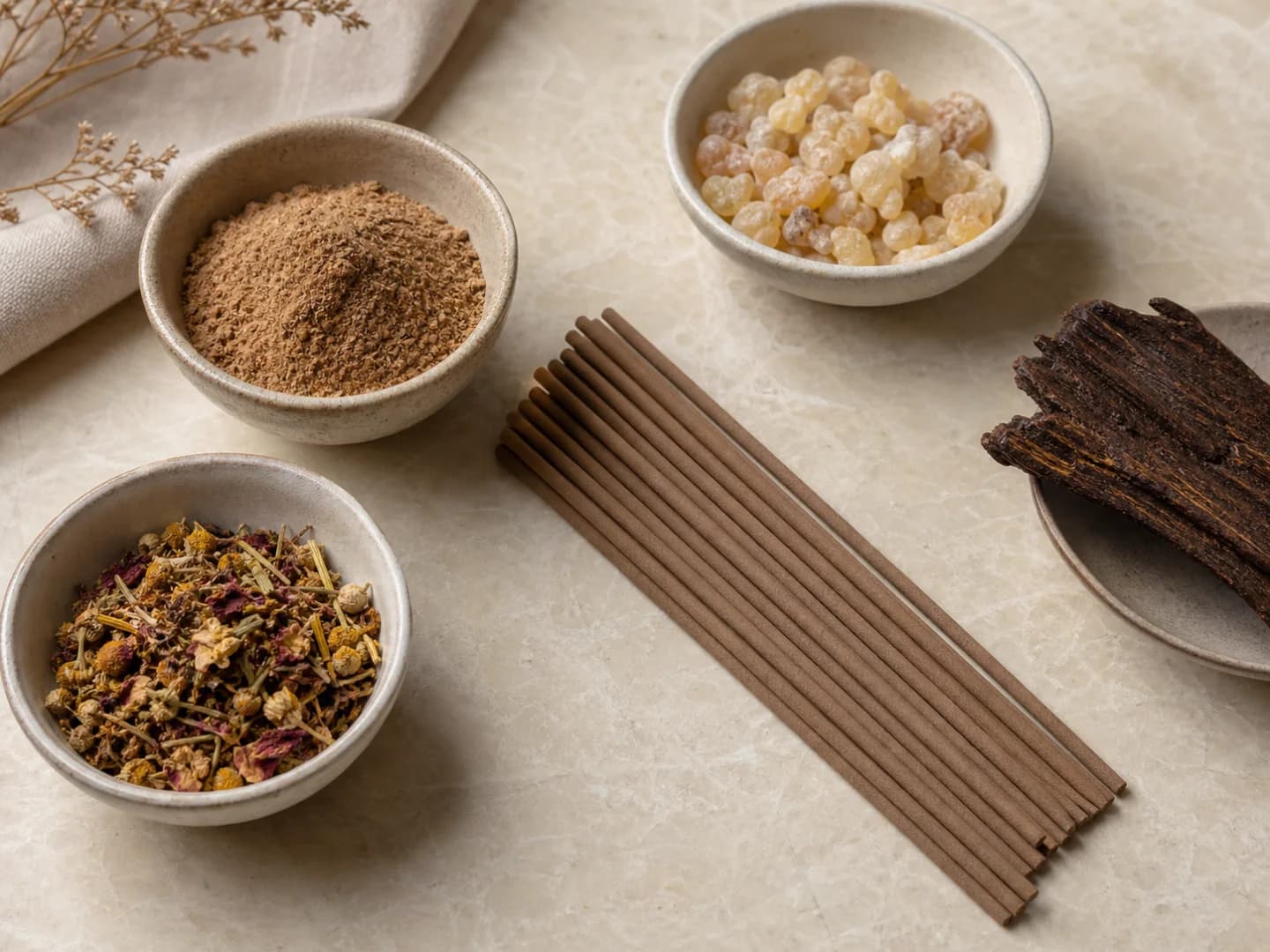
Natural incense usually smells softer, quieter, and less sharp than incense built around artificial fragrance oils. It does not need to fill the room immediately. A natural sandalwood stick should smell warm and woody. Frankincense should feel resinous and bright. Lavender should feel gentle, not like detergent. Cedar and sage should feel dry and herbal, not like a room spray.
A strong scent is not automatically bad, but intensity is a useful warning sign. If an incense stick claims to smell like rose, lavender, sandalwood, or palo santo, but the scent is extremely loud before burning, very sweet, or perfume-like in a way that overwhelms the room, it may rely heavily on added fragrance oils. Natural incense can still have character, but the scent usually feels layered, mild, and closer to the raw material.
Natural incense is not guaranteed to be allergy-free or irritation-free. Incense is still smoke. People who are sensitive to smoke, dust, fragrance, or plant materials should test with a short burn and keep the room ventilated. The safer claim is this: a well-made natural incense is usually less piercing and less perfume-heavy, but every person reacts differently.
Before buying, check these points:
| Check | Natural incense usually feels like | Artificial-fragrance incense may feel like |
|---|---|---|
| Cold smell before burning | Mild, woody, herbal, resinous | Very loud, sweet, perfume-like |
| Burning scent | Softens into the room | Pushes into the room quickly |
| Material logic | The scent matches listed ingredients | The scent feels stronger than the materials explain |
| Room behavior | Gentle background scent | Clings to fabric or feels heavy |
| Product copy | Names materials and use cases clearly | Uses vague words like exotic, luxury, temple-grade |
Do not judge by price or packaging alone. A natural-looking box can still hold heavily scented incense. A useful product page should answer plain questions: What ingredients are listed? Is the scent woody, floral, resinous, or sweet? Is it strong or subtle? Is it better for a small room or a large open space? How long should a beginner burn it?
Oudhalo describes each incense through its materials, scent strength, and suitable rooms, so buyers can choose by how they actually plan to use it at home.
How to tell natural incense from artificial fragrance incense?
Natural incense usually smells softer, quieter, and less sharp than incense built around artificial fragrance oils. It does not need to fill the room immediately. A natural sandalwood stick should smell warm and woody. Frankincense should feel resinous and bright. Lavender should feel gentle, not like detergent. Cedar and sage should feel dry and herbal, not like a room spray. A strong scent is not automatically bad, but intensity is a useful warning sign. If an incense stick claims to smell like rose, lavender, sandalwood, or palo santo, but the scent is extremely loud before burning, very sweet, or perfume-like in a way that overwhelms the room, it may rely heavily on added fragrance oils. Natural incense can still have character, but the scent usually feels layered, mild, and closer to the raw material.
Related reading
Can incense ash tell you if incense is natural?
Incense ash alone cannot reliably tell you whether incense is natural or made with artificial fragrance oils. Online advice often says that curled, unbroken ash…
Read article →How to store incense sticks so the scent lasts longer
Incense sticks should be stored in a dry, shaded place, away from moisture, direct sunlight, kitchen smells, perfume, and cleaning products. A sealed tube, tin…
Read article →Beginner incense set: what should be inside?
A good beginner incense set should not be a random mix of bestsellers. It should teach the nose.
Read article →